Value Selling: How One Phone Call Turned Into a Top Market
Matt Butler, MB Resources | 3-4-minute read
A real example of creating an opportunity, then selling its value.

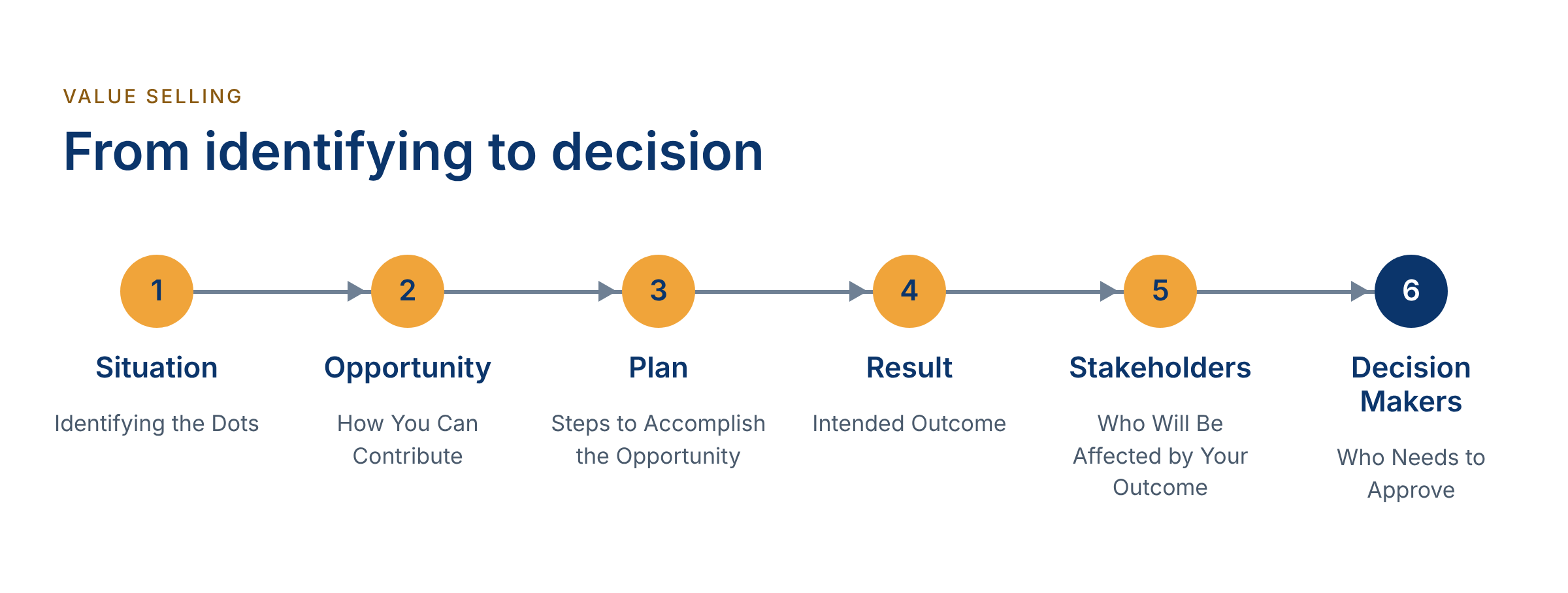
Salespeople collect bits of information every day. It could be a customer’s comment on a sales call, a production line you saw on a factory tour or a stack of boxes in a contractor’s shop.
On their own, each of these may not seem like much. But once you start connecting these to your customer’s needs, they can be turned into real opportunities.
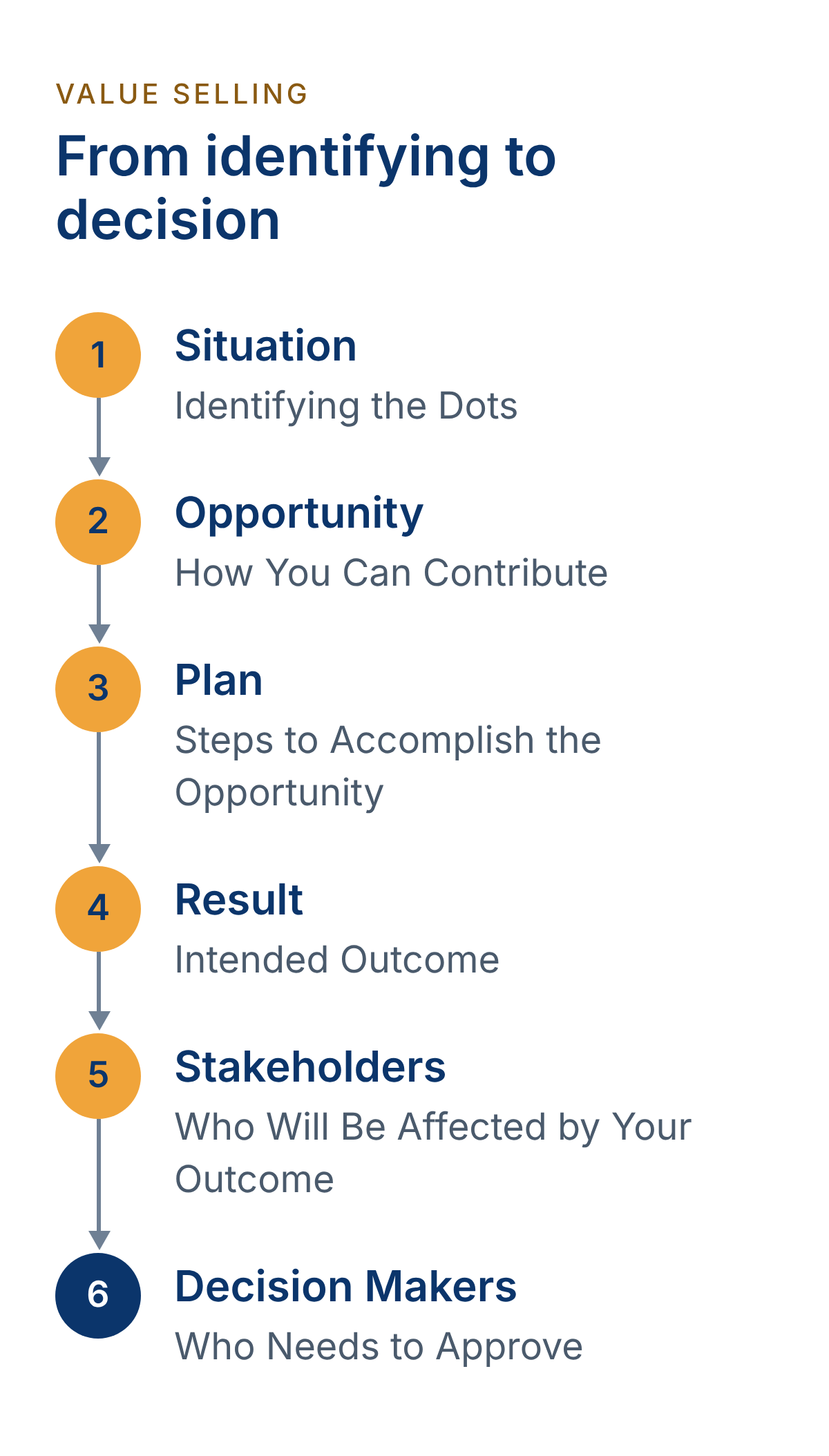
That’s only the first step, the real work is getting from idea to decision, and that means selling the value.
Teams that sell on value have been shown to improve win rates by 48% and increase deal size by 35%. 1
Presenting the Value
When we build a business plan, defaulting to numbers can become a habit. We present a spreadsheet showing ROI and wonder why the customer doesn’t bite.
The end result might be money, but there are several stops we need to make on our way there.
Each person involved will have a different view on what you’re proposing. Our job isn’t about getting them to see it our way. It’s about understanding where each one is coming from and presenting the opportunity in a way that connects to what they value.
Here is a firsthand example from when I was representing an indoor air quality (IAQ) manufacturer.
The Phone Call
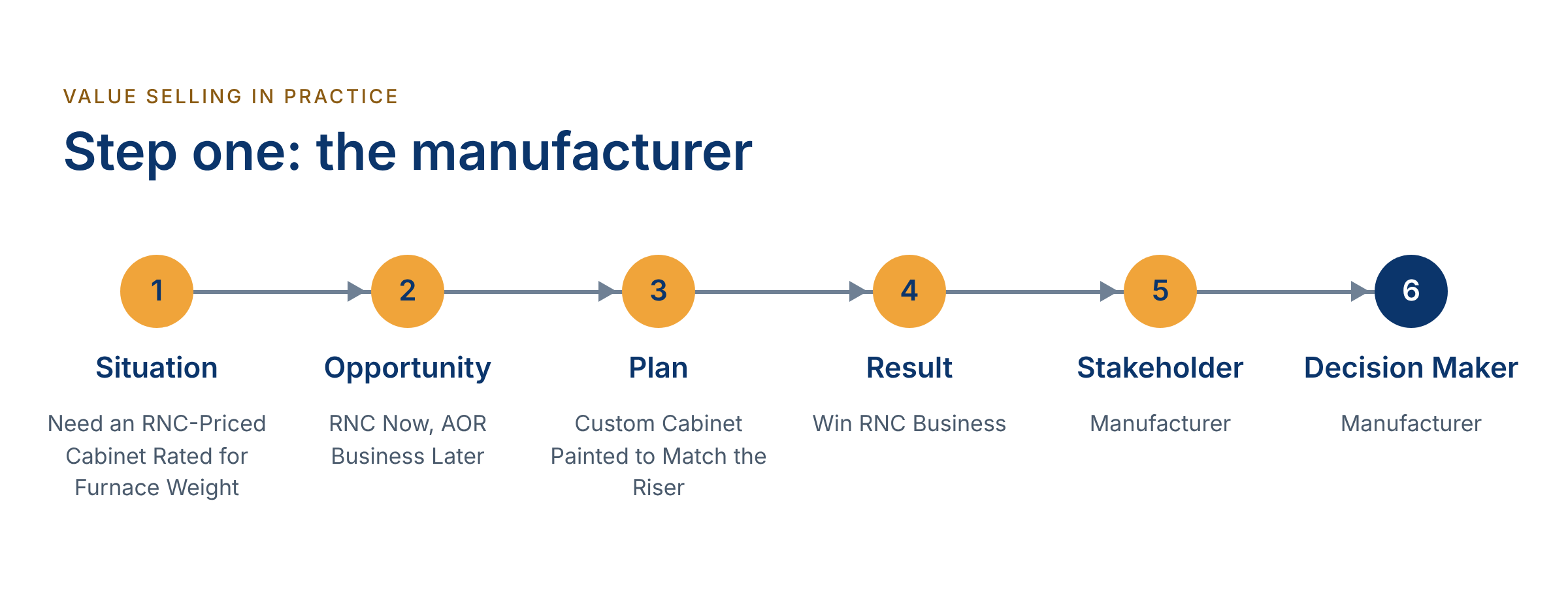
A Territory Manager called looking for a filter cabinet he could sell to residential new construction (RNC) contractors.
The application put the weight of a furnace on top of a filter cabinet, and his “lightweight” OEM assembly wasn’t strong enough. Our cabinet was more than strong enough, but our pricing wasn’t going to get the business.
From a visit to the factory, I knew my manufacturer could build a more cost-effective custom cabinet. And I also knew the distributor had the predominant market share of add-on replacement (AOR) business. If we could build a cabinet that solved the RNC problem, I was confident we could move most of that replacement business over as well.
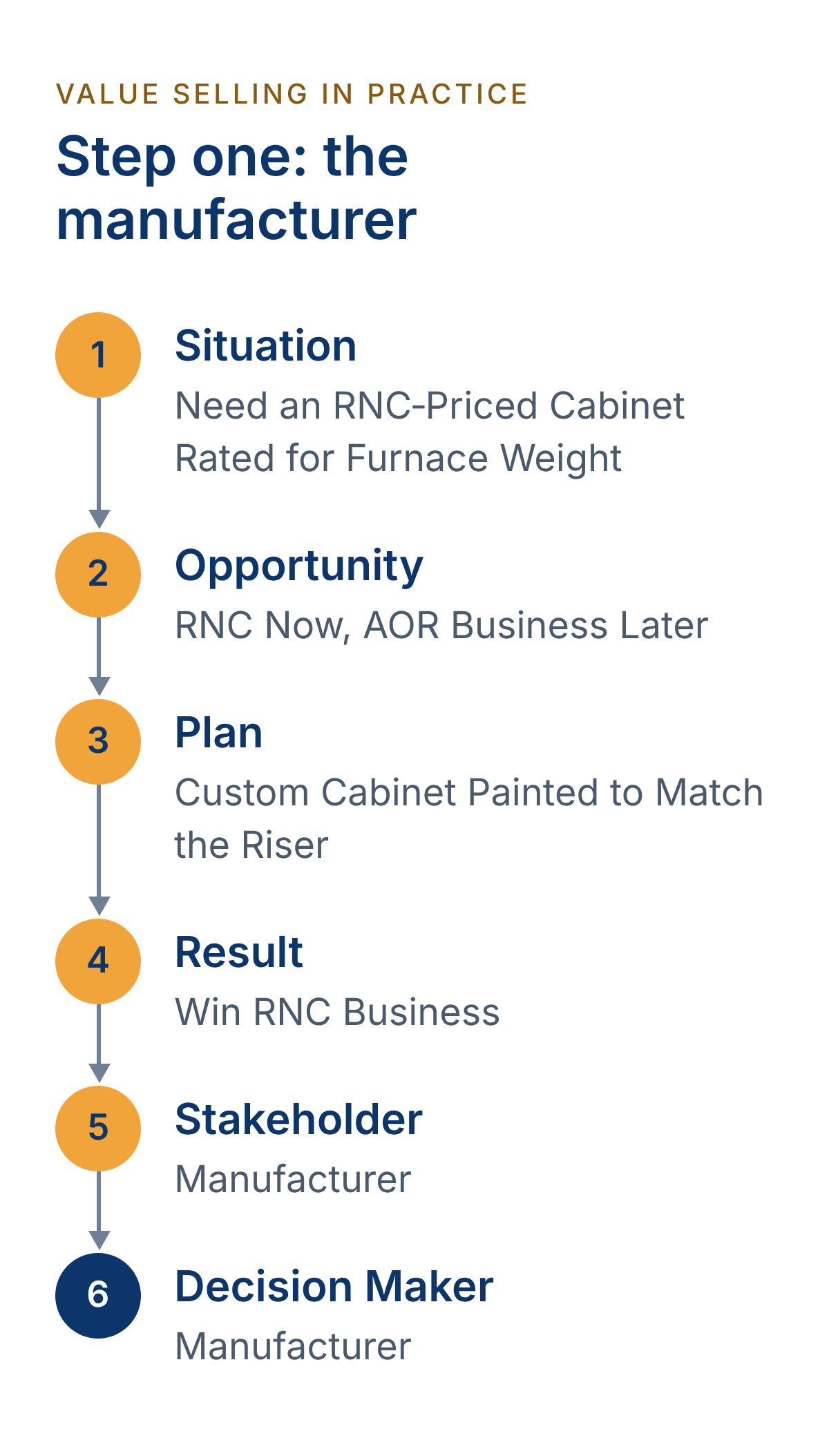
The Manufacturer’s Value
That’s the proposal I took to my manufacturer: a simplified custom cabinet, strong enough to hold a furnace and priced for new construction, plus a shot at the replacement business.
Another part of the plan was our furnace riser, a stand that lifts the furnace up off the floor. I wanted the custom filter cabinet painted to match the riser so the two would look like a single assembly once installed. It didn’t matter for the RNC business, but I was counting on it to get the AOR business.
The manufacturer saw the value and agreed, and we started moving RNC custom cabinets.
The Territory Managers’ Value
For the RNC Territory Manager, the cabinet solved a problem.
The replacement business was a different conversation. The other Territory Managers had been selling the OEM filter assembly for years. We were asking them to spend time changing and upselling business they already had.
Once the custom cabinets were in stock, I met with the higher-volume Territory Managers. For them, I presented the value as more commission on a higher-priced cabinet, plus new commission on a riser they weren’t selling before.
The Contractors’ Value
The contractors needed to see this from a different angle, so we placed a few cabinets and risers with key contractors as a trial run.
Contractors are typically labeled as only caring about price. They could field-assemble cabinets and build their own risers for considerably less money than buying ours. But once they saw value in their own way, they were willing to pay more for both.
The paint matching and riser were part of the plan from the beginning, and that’s where knowing what your audience values paid off.
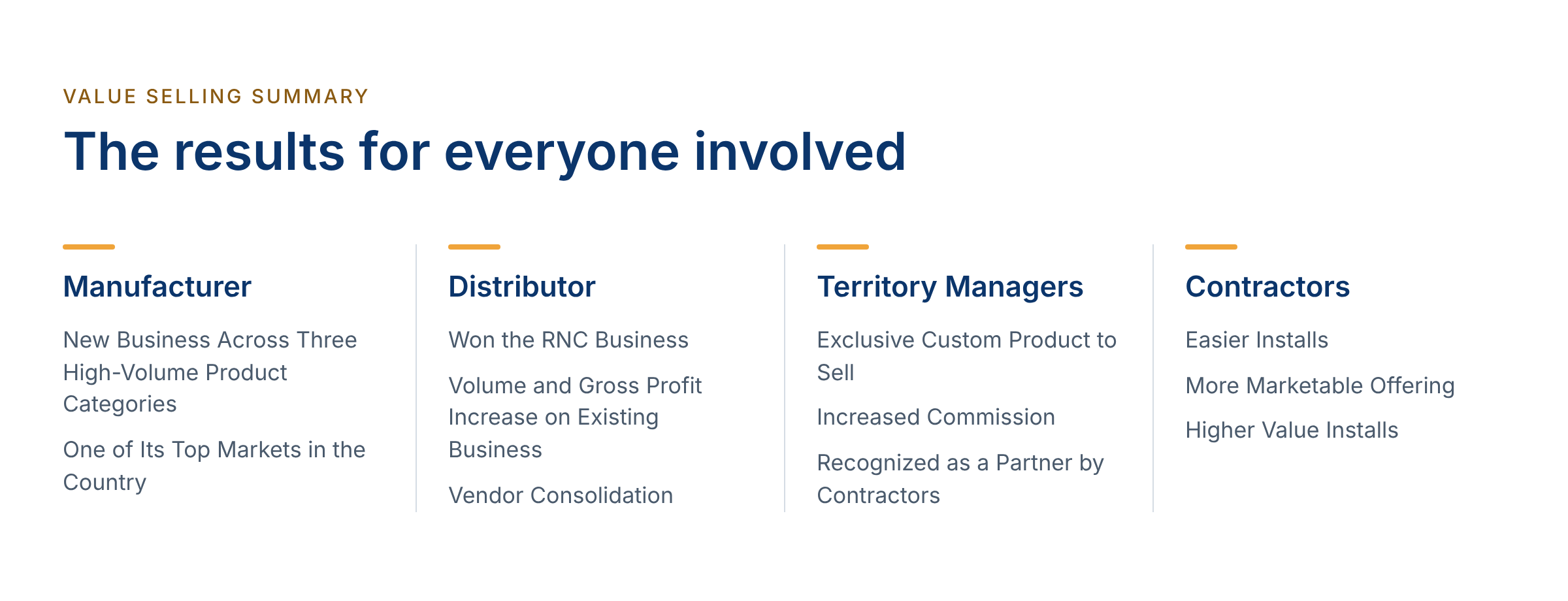
Most of the distributor’s AOR business moved over, and it moved to two higher-priced products. Volume and gross profit went up for both the manufacturer and the distributor.
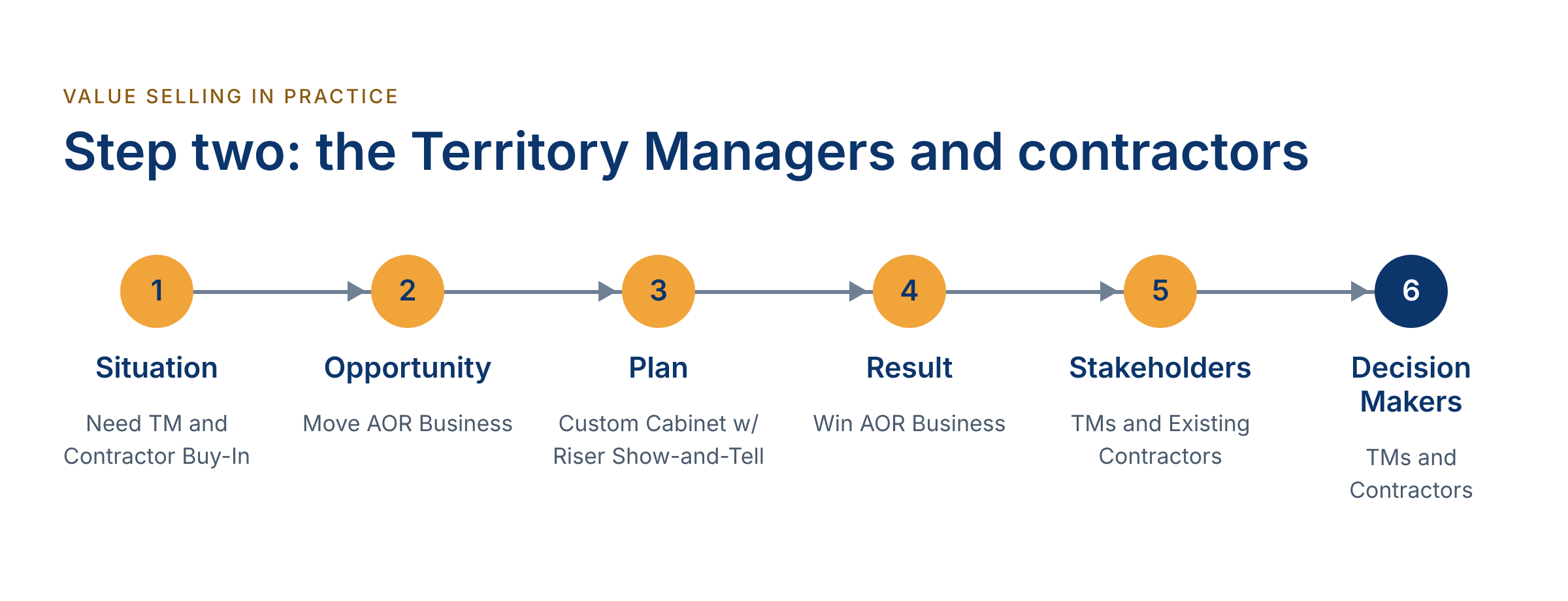
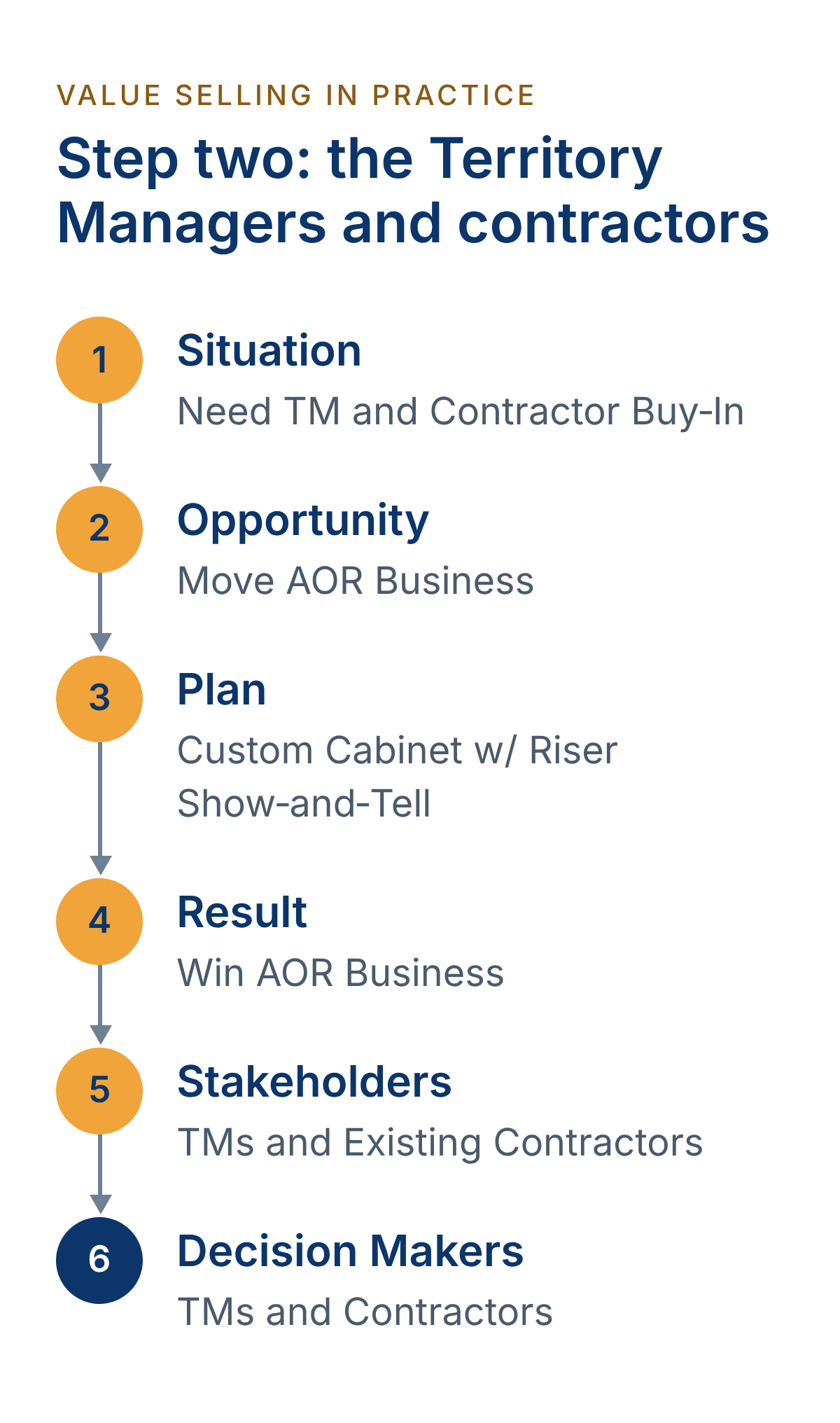
Contractors are typically labeled as only caring about price. They could field-assemble cabinets and build their own risers for considerably less money than buying ours. But once they saw the two together, they were willing to pay more for both.
The paint matching and riser were part of the plan from the beginning, and that’s where knowing what your audience values paid off.
Most of the distributor’s AOR business moved over, and it moved to two higher-priced products. Volume and gross profit went up for both the manufacturer and the distributor.
The Results
Once all the wheels were in motion, the distributor became one of the manufacturer’s top sellers in the country.
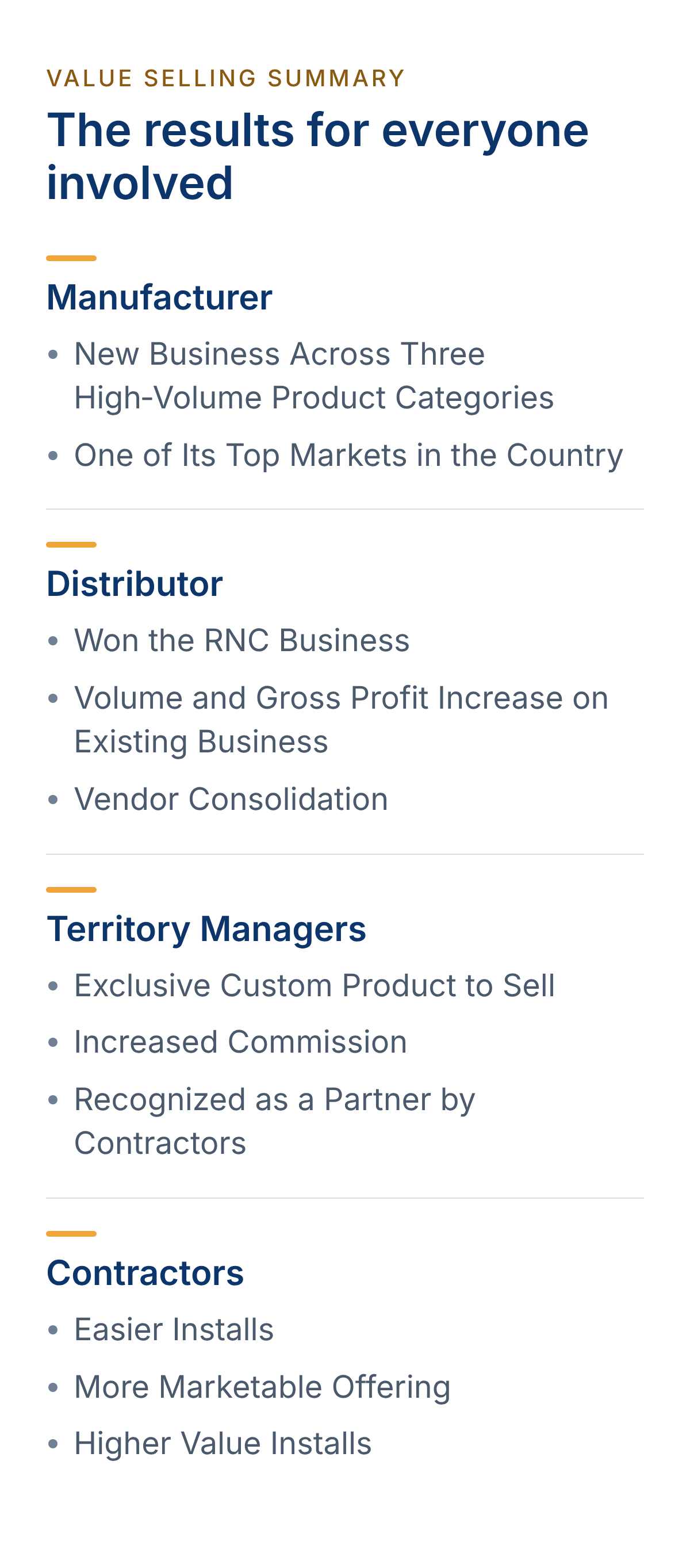
All of this came from a single phone call asking for a low-price filter cabinet, a call that could have easily ended with “Sorry, I can’t get there on price.”
Your Team’s Value
MB Resources offers sales coaching for distribution and manufacturing teams that want to improve performance, grow revenue, and sell more effectively.
I use real situations from their day-to-day selling, but the goal is broader than any one deal: stronger thinking, better execution, and more consistent results.
Because the coaching is built around their real work, it strengthens performance without pulling them away from selling.
“He helps people think beyond the basics and expand their own purpose in achieving their goals.”
— Eric Andrus, Owner, HVAC Equipment Sales
I’d like to hear about your team and where you'd like to see growth.
When can you make time to talk?
Matt has spent more than 30 years in HVAC and distribution, starting at the counter and in the field as a mechanical trades technician. After 15 years as a manufacturers’ rep and co-owner of an independent rep agency, leading a high-performing territory, he started MB Resources to coach sales teams in distribution and manufacturing.
Matt Butler, MB Resources | 801.244.4844 | matt@mattbutler.org
See more in The Distribution Sales Gap.
¹ Source: B2B Sales Research: The Proven Impact of Value Selling & Adoption, Genius Drive, Enterprise Value Collective, and Cuvama, 2024.